Black Mold Removal in Irving, TX
You pulled the washer out to fix a rattle and found a black patch the size of a cookie sheet on the wall behind it, with a wet line along the bottom where the drain hose has been weeping. Your phone has already shown you a dozen frightening pages about it. This site connects you by phone with an independent local provider who does black mold removal in Irving and across western Dallas County.
Why the crew asks how long, not what kind
Color names nothing reliable. Dark growth can be any of several common molds, and the only way to know the species is a lab test, which the crew does not need in order to remove it. What the color does tell them is that the wall has been wet for a while, because surface growth darkens as it matures. So the first question is not what kind, but how long and how far.
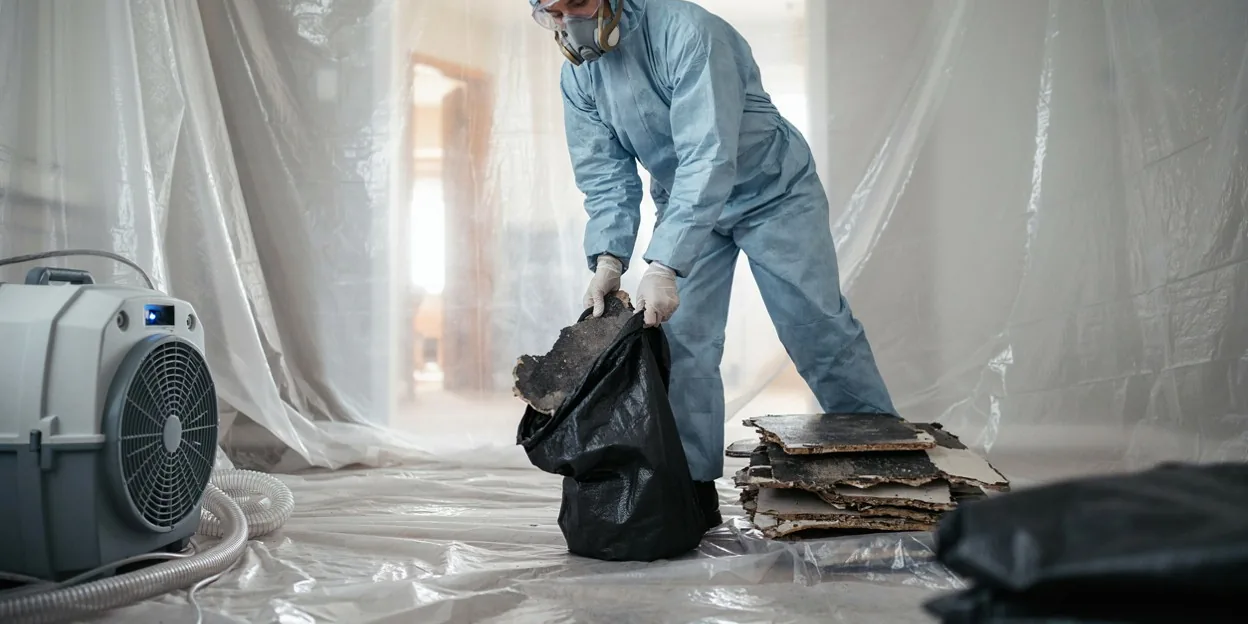
The crew meters the wall behind the washer, the floor under it, and the wall on the other side, which in a lot of Irving laundry rooms is a hall bath or a bedroom closet. They mark where the wet stops. Containment goes up across the laundry door, the register gets taped, and a HEPA scrubber runs the room under negative pressure before anything is cut.
Close both washer valves and leave the wall standing
Turn off both washer valves and check the drain hose and the standpipe for the leak. If a supply hose is split, replace it before the next load; if the standpipe overflows, stop using the machine until a plumber clears it. Photograph the wall and the floor as you found them.
Leave the drywall alone. Scrubbing a mature dark patch without containment spreads more spores than it removes, and bleach on drywall soaks the paper while the growth inside the board stays put. Keep the laundry door shut and the air conditioner running. If a cabinet floor or vanity shares the wet wall, empty it so the crew can get to the back panel.
Wet board bagged, framing wiped, slab dried before the plastic comes down
Drywall, baseboard, and any insulation in the wet section come out to a set distance above the moisture mark and leave in sealed bags. Studs and the bottom plate stay if they meter dry after a HEPA vacuum and a wipe-down; wood that reads wet gets dried first and cleaned again. A laminate or vinyl floor over a wet slab comes up as far as the readings say.
The crew runs air movers and a dehumidifier until the slab edge and framing read dry, then does a final HEPA pass before the plastic comes down. If the patch turns out to be the visible end of a slab leak that wet several rooms, the job becomes whole-home mold remediation. If the smell lingers after the material is gone, see mold odor removal. Replacing the drywall and trim is mold damage repair.
Laundry closets against garage walls, and a hose that weeps a cup a load
Most laundry rooms in Irving houses built before 1990 sit against a garage or an exterior wall with the standpipe run into a cast iron drain under the slab, and an interior laundry closet in a Las Colinas two-story often backs onto a hall bath. Neither location gets much air. A drain hose that weeps a cup a load, in a closed room at 78 degrees with Dallas County summer humidity outside, keeps that wall wet year-round.
Texas law treats the color the same way the crew does: what matters is size. Growth over 25 contiguous square feet, dark or not, must be removed by a licensed mold remediation contractor under Chapter 1958 of the Occupations Code, and you are owed a Certificate of Mold Damage Remediation when the work is finished. Most Texas homeowner policies pay for a sudden hose failure and exclude a slow weep, so note the date you first saw the wet line.
The call about the wall behind the washer
Have the address, where the patch is and about how large, what you think has been leaking, and whether anyone in the house has asthma or allergies that flare around it. Call (469) 652-8352.