Mold Odor Removal in Irving, TX
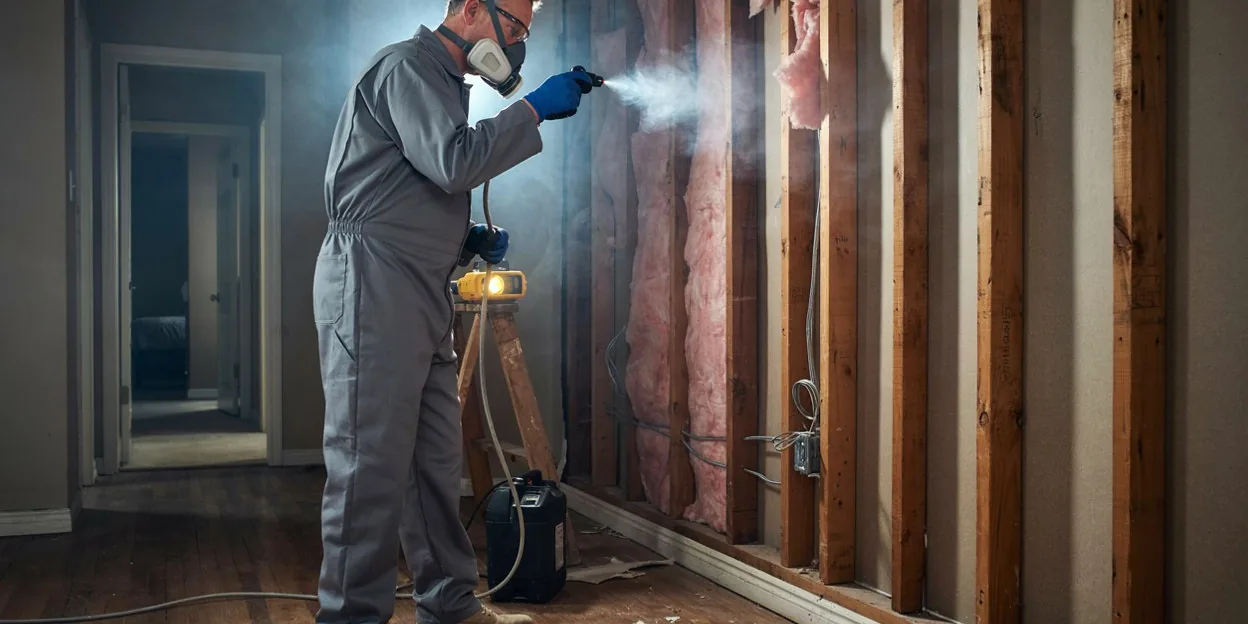
Nothing in the house is stained. The walls are painted, the floors are clean, and still the back bedroom smells like a damp cellar, strongest on muggy September evenings and almost gone on a dry January morning. You have tried candles, plug-ins, and an air purifier, and your guests still notice it at the door. This site connects you by phone with an independent local provider who does mold odor removal in Irving and across western Dallas County.
Hunting the moisture instead of the odor
A musty odor is a gas given off by active growth, and active growth needs wet material, so the crew hunts for the moisture rather than the smell. They meter the base of every wall in the room and the rooms around it, read the slab in a grid, and look at the usual Irving suspects: the floating floor laid over a slab that sweats, the back of a built-in cabinet against an exterior wall, the closet that shares a wall with a bathroom, and the ceiling under an attic air handler.
A thermal camera finds cold wet spots behind paint and the warm track of a slab leak under the floor. Where the readings climb, they pull a baseboard or lift a floor plank to confirm. Most of the time the source is a single wet area that has been slowly growing for a year.
Stop masking it and start writing down when it is worst
Stop masking it. Candles and plug-ins make it harder for the crew to find the source on the first visit. Write down when the smell is strongest, which room, whether it changes when the air conditioner runs, and what the weather was doing. That log often points straight at the cause.
Look for the simple things yourself: a damp spot on the carpet near an exterior wall, a soft toe-kick under the kitchen cabinets, a laundry standpipe that gurgles, a window that sweats on the inside in August. Photograph what you find. Keep the room door shut and the system running on auto.
The four things that usually turn up under an Irving smell
The common findings in Irving are a slab leak that wet the pad under one room, a sweating slab under a floating laminate floor with no vapor barrier, a window flashing leak that kept the drywall under the sill wet, and a condensate overflow in the attic above. Whatever it is, the wet material comes out under containment: pad, flooring, the bottom section of drywall, the cabinet back. Framing and slab are HEPA cleaned and dried.
Only after the source is gone does odor treatment start, because treating the air while the wet material stays is a weekend's relief. The crew runs HEPA filtration, cleans the ducts if they carried the smell, and may use an odor-neutralizing treatment on the framing before the wall closes. If the hunt turns up a leaking bath, see bathroom mold removal. If the smell comes from the ductwork or the attic unit, see HVAC mold cleaning. Replacing what came out is mold damage repair.
Gulf humidity, cool slabs, and laminate laid without a vapor barrier
Irving's humidity peaks in late summer, when the Gulf air sits over Dallas County and dew points stay in the 70s for weeks. A slab on Blackland clay stays cooler than the room above it, and if the house has a laminate or engineered floor laid without a vapor barrier, moisture condenses underneath and the underlayment grows mold with no leak anywhere. The smell shows up when the air is heaviest and fades when the first dry cold front arrives.
The other September pattern is a slab leak that has run since spring; the warm floor goes unnoticed in summer, and the pad under the carpet is the only wet material in the house. Either case counts as mold once the crew opens it, and if the wet area passes 25 contiguous square feet the removal must be done by a licensed Texas mold remediation contractor under Chapter 1958 of the Occupations Code.
Explaining a smell you cannot point to
Have the address, which room smells worst, when it peaks, and whether it tracks the air conditioner. Say whether you have noticed a warm floor, a soft toe-kick, or a window that sweats. Call (469) 652-8352.